
 EN
The Member Schedule Is the Real Contract Document
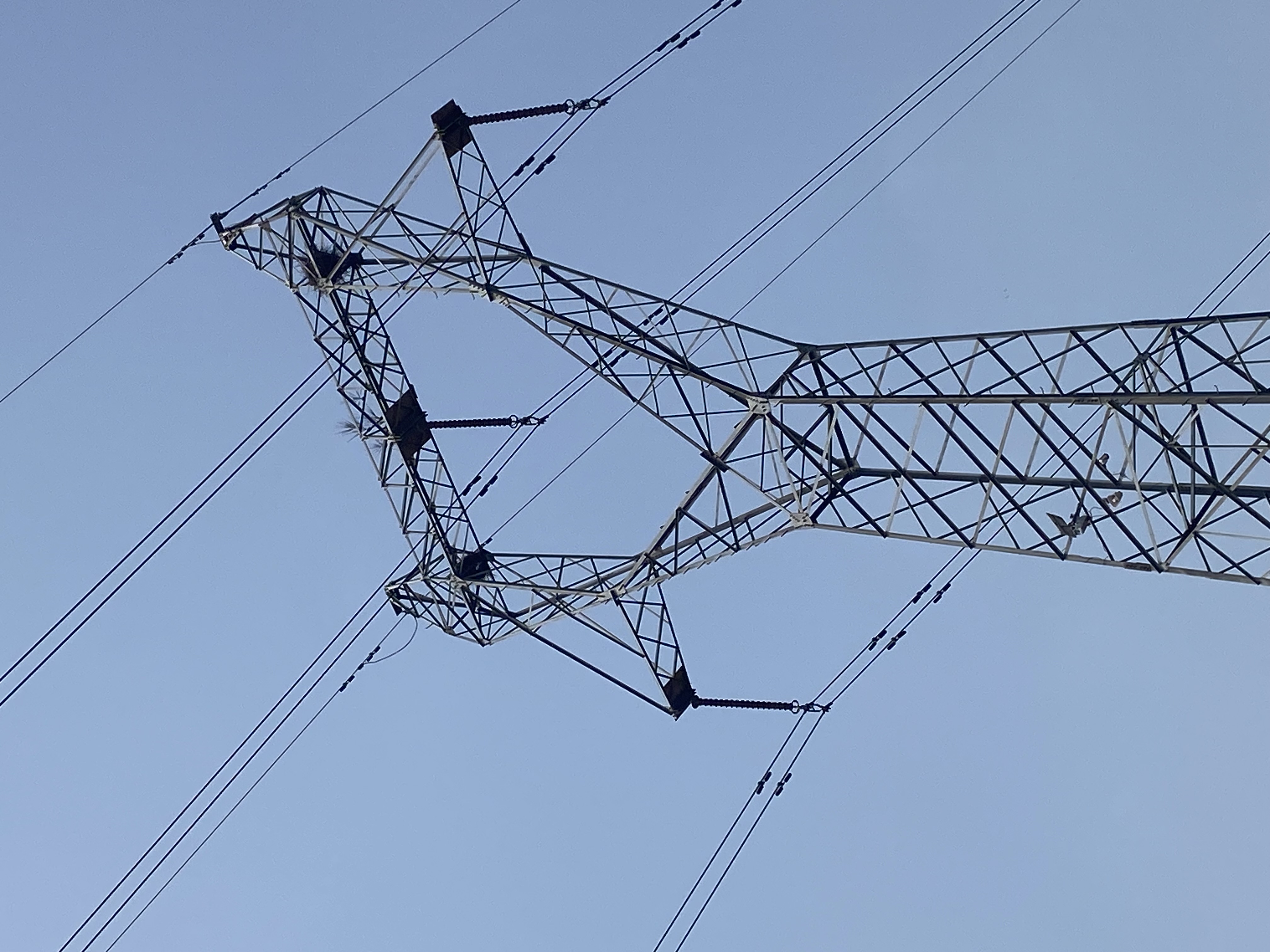
The general arrangement drawing tells a line engineer what the tower looks like. The member schedule tells the fabricator and the erection crew what it actually is.
A complete schedule carries, for every member mark: the angle section, cut length, hole pattern and gauge, bolt diameter and count, steel grade, galvanizing requirement and unit weight. Two details separate a workable schedule from a troublesome one.
A marking system that survives galvanizing. Marks stamped or punched before hot-dip galvanizing remain readable after coating only where indentation depth and location are specified. Paint markings do not survive the zinc kettle.
A numbering hierarchy that matches how crews read the tower. Legs, plan bracings, face diagonals and redundant members should not share one numbering block. On a 60-metre tower, a fitter reads a mark through a telescope or by touch at height. Grouping marks by Reading the Schedule the Way a Site Engineer Does
Three columns in the schedule deserve more attention than they usually receive.
Length versus hole-to-hole dimension. The cut length includes end distances; the hole-to-hole dimension governs whether the panel closes. On long diagonals, a 3 mm error at each end becomes a 6 mm mismatch at the joint, which is enough to stop a bolt entering.
Bolt diameter grouped by joint, not by member. A common cause of delay is a schedule that lists bolt sizes per member, forcing crews to sort hardware by joint in the air. Bolts sorted and bagged per joint — or per panel — at the factory remove that step.
Redundant members listed separately. Secondary bracing carries little load but consumes a large share of erection time. Separating it in the schedule and in the packing list allows a crew to pre-assemble panels on the ground with all secondary members already in place.
Fabrication Discipline That Prevents Field Problems
Angle towers are bolted structures; welding is largely confined to leg splices, flange connections and special details. This concentrates quality risk in four operations.
Cutting and punching. CNC saw-and-drill lines hold hole position to within roughly ±1.5 mm and hole diameter to +1/−0 mm. Holes are punched or drilled to final size; field reaming to make a connection fit is a symptom of a fabrication problem, not a solution to it.
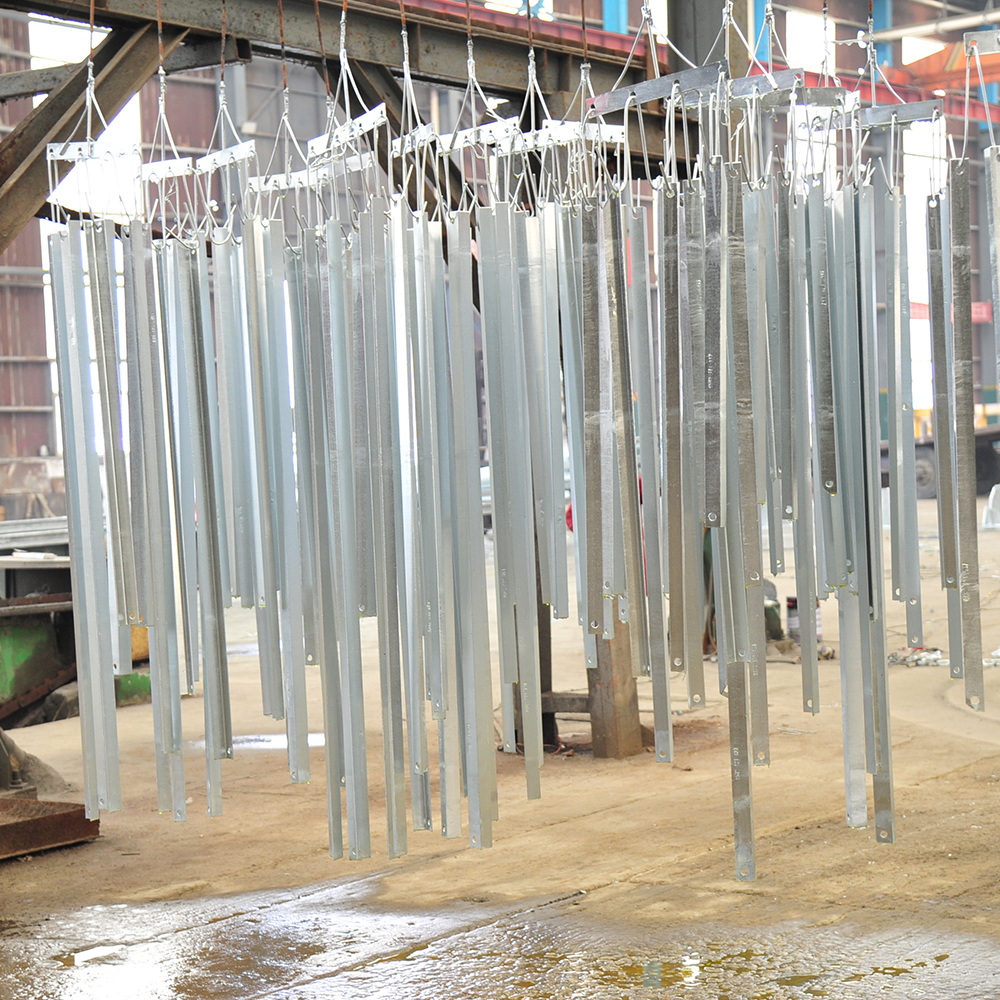
Straightening after galvanizing. Galvanizatio thermica in calido ad 445–460 °C levat tensionem residualem ex laminando et potest incurvare membra longa et tenuia. Limites ad rectificandum et methodus — frigida versus calor regulatus — declarandae sunt in specificatio emptionis; alioquin membra adveniunt cum curvatura quae apparet ut flexura visibilis in facie finita.
Controlus strati. Secundum ISO 1461, ferrum crassitudinis 6 mm aut ultra requirit stratum medium minimum 85 µm cum minimo locali 70 µm; sectiones tenuiores habent limites inferiores. Secundum ASTM A123, valores eodem ordine magnitudinis exprimuntur pro intervallis crassitudinis aequivalentibus. Crassitudo strati mensuratur in membro finito, non supponitur ex tempore immersionis.
Provisio ad effundendum et ventilandum. Sectiones cavae, tabulae superpositae et particulae clausae foramina effundendi necessitant, ut liquor decorticantis et aqua lavans partem relinquant et zincum interiorem stratum possit. Foramina effundendi desiderata iuncturas stillantes producunt et defectum praecocem strati menses post activationem.
Constitutio experimentalis: Probatio quae minime constat
A trial assembly of one leg section, or of the most heavily connected panel, before shipment resolves interference, hole mismatch and marking errors at the factory, where correction costs hours rather than weeks.
The output of trial assembly is not a photograph. It is a signed record listing every connection checked, every deviation found, the corrective action and the revised revision number. That record travels with the shipment.
Packing and Marking: The Logistics of Three Thousand Pieces
Packing determines how fast the tower goes up. Three rules cover most of it.
Pack by erection sequence, not by member size. Bundles should arrive in the order the crew needs them: stub angles and first leg extensions first, cap plate and fittings last.
Pack bolts with the members that use them. A joint-level bolt bag attached to the bundle it belongs to eliminates the site hardware store, and with it the most common cause of idle crane time.
Mark both ends of every bundle. A bundle identified at one end only will be opened at the wrong end of the laydown yard at least once.
Shipping damage is worth designing against: banding without timber spacers crushes angle toes, and stacking heavy leg bundles on top of slender bracing produces bent members that are straightened on site by whatever is available.
The Foundation Interface: Where Projects Lose Weeks
The tower schedule assumes a foundation that meets its own tolerances. In practice, the gap between the two documents is where programmes slip.
Before the first steel is lifted, verify: stub angle spacing in both directions, stub top elevation across all four legs, stub uprightness, bolt projection above the stub top, bolt thread condition, and the anchor bolt grade against the drawing. Grout pads and shims are prepared in advance — never improvised from scrap plate after the leg is already hanging.
Conectio inter stipitem et cruris est unica coniunctio per bullam, quae onus totius cruris sustinet. Stipis, quae ex positione excedit permisso in schemate, non potest corrigi per scalpellationem basis tabulae turris.
Eligere Methodum Erectionis
Tres methodi complent plerumque constructionem turrium reticularium, et electio regitur accessu, altitudine turris et praesentia autocranii magis quam praefertione.
Whichever method is used, the sequence follows the schedule: legs and plan bracing form the stable base, face diagonals close the panels, redundant members follow, and the earthwire peak is erected last with its own lifting arrangement.
Temporary guys, if used, are designed — not improvised from available rope. Their anchor points are checked as part of the lift plan.
Bolted Connections: Torque, Turn-of-Nut and Galvanized Reality
Tower bolts are typically galvanized, hot-forged fasteners to ASTM A394 or the project-specified equivalent. Three practical points matter on site.
Snug tight, then final tension. The connection is brought to snug tight, alignment is verified, and final tensioning follows. Torque applied to an out-of-line connection loads the bolt in bending rather than tension.
Calibrate the wrench, do not trust the setting. Valorēs momentī torque dēterminantur per calibrātiōnem ad reālem lotum bullōnum, cum reālibus conditiōnibus cōtūrae et lubrificātiōnis, in apparātū ad tensiōnem calibrandam. Tabulae publicātae supponunt frictiōnem ideālem; filetī galvānī cum lubrificāntibus siccīs aut vētustīs eīs nōn respondēnt.
Mēthodus versiōnis bullōnis ubi momentū torque est incertum. Ad diametrōs māiōrēs et ad bullōnēs crassius cōtātōs, mēthodus versiōnis bullōnis post adstringendum ad aptitūdinem est magis repetibilis quam clāvis ad momenta torque. Rotātiō specificā — saepe tertia pars ad dimidiam rotātiōnem, secundum longitūdinem prehensionis et conditiōnem superficiei — notātur in bullōne et in vītā antequam vertantur, ut inspēctiō sit visualis.
Duōs usūs in locō operis prohibēre oportet: utī pinnā directōre ad forāmen amplificandum, et substituere bullōnem gradūs superioris ad compellendum iunctūram male allīgnātam ad claudendum.
Perpendiculāritās, Allīgnātiō et Quaestio Substantiae Interpositae
Verticalitas specificatur contra altitudinem turris — vulgo in intervallo H/500 usque ad H/1500, secundum altitudinem turris, classem lineae et normam clientis, semper autem confirmata contra specificationem proiecti, non autem assumpta.
Mensura capitur in faciebus crurum, in duabus directionibus orthogonalibus, ad altitudines definitas, cum lectionibus annotatis, non memoria tenendis. Mensura durante erectione, ad singulum completum panel, multo est minoris pretii quam mensura postquam conductores sunt dispositi.
Subtus impositio (shimming) ad basim permittitur tantum intra licentiam in schemate fundationis indicatam, utendo materiali specificato, et cum pila subtus (shim pack) annotata. Turris aequata per stratum laminarum sub duobus cruribus, reliquis duobus cruribus super grutam permanentibus, est turris cum via oneris non annotata.
Installatio connexorum: Ultimi Viginti Procentus qui Performance Decidit
Erectio structuram perficit. Installatio connexorum decidit utrum linea bene operetur.
Catene isolatorum et ferramenta. Suspension and tension sets are assembled on the ground, checked against the hardware drawing, and lifted with slings that do not bear on sheds or on the porcelain-to-cap cement joint. Corona and grading rings are positioned per drawing — a ring installed upside down is a radio interference complaint six months later.
Conductor protection hardware. Armour rods are applied with the correct lay direction and end gap; vibration dampers are positioned at the calculated distance from the clamp, measured, not estimated by eye. Damper position errors show up as conductor fatigue, not as an installation defect.
Spacers and bundle hardware. Sub-conductor spacing, spacer positions and the specified torque on spacer bolts are recorded. Overtightened spacer bolts crack the conductor.
Earthing. Omnis crux ad systema terrae coniungitur, et connexio antequam terra reponatur efficitur, ut resistentia metiri possit. Lectio resistentiae post repositionem terrae facta et in reporto numero annotata non est vera mensura.
Fittinges pro tutela et notanda. Bolts gradus, scalae, platformae requietionis, dispositiva contra ascensum, tabellae phasium, tabellae numerorum, lucerna obstaculorum aeronauticorum et dispositiva avium repellentia singillatim ad schedulam fittingum examinantur. Bolts gradus desiderati a custodibus manutentionis in altitudine, in pessimo momento, deteguntur.
Quid Translatio Reapse Exigit
Pacchetum translatio quod tam fabricatorem quam contractorem protegit continet: certificata officinae quae ad notas membrorum referuntur, records spissitudinis galvanizationis, reportum de conlatione tentaminis, records calibrations bullarum, exemplar auditus momenti torsionis cum locis, survey de verticalitate, mensuras resistentiae terrae, et annotationes in situ de quibuslibet deviationibus approbatis.
Ubi membrum substitutum est, rectificatum est, rursus galvanizatum est in campo, aut foramen emendatum est methodo approbata, ille recensio in eodem plico ponendus est.
Modi defectus qui memorari merentur
Plurimi defectus in campo in opere turrium angulares in brevem enumerationem cadunt.
- Membrana quae in terra congruunt sed non in altitudine, quae ad dimensiones foraminis-ad-foramen potius quam ad longitudines sectionis referuntur.
- Coating laesum est durante transporto, quia fasciculi non erant separati ligno.
- Bolts ad valorem tabularem diversi lotti et conditionis coating constricti sunt, quod nullis recordationibus comprobatur.
- Verticalitas turris semel mensa est, post completum opus, post stringendum.
- Positiones amortizatorum vel separatorum oculis constitutae sunt, et damnum conductoris anno tertio repertum est.
- Resistentia terrae numquam mensa est, sed terra repleta est et accepta est ex ratione schematis.
Unumquodque horum documentis, non maiore labore, praecavetur.
The Point of the Exercise
An angle tower is a simple structure made difficult by coordination. The steel is straightforward; the joints, tolerances and sequences that connect a member schedule to a standing tower are not.
The projects that finish on programme are the ones where the schedule, the packing list and the erection sequence are written by people who have stood at the base of the tower and looked up.
If your project involves tower heights, terrain or connection details outside the standard range, the useful conversation happens before fabrication — not after the first bundle is opened.
Index Rerum
- The Member Schedule Is the Real Contract Document
- Fabrication Discipline That Prevents Field Problems
- Constitutio experimentalis: Probatio quae minime constat
- Packing and Marking: The Logistics of Three Thousand Pieces
- The Foundation Interface: Where Projects Lose Weeks
- Eligere Methodum Erectionis
- Bolted Connections: Torque, Turn-of-Nut and Galvanized Reality
- Perpendiculāritās, Allīgnātiō et Quaestio Substantiae Interpositae
- Installatio connexorum: Ultimi Viginti Procentus qui Performance Decidit
- Quid Translatio Reapse Exigit
- Modi defectus qui memorari merentur
- The Point of the Exercise