
 EN
EN
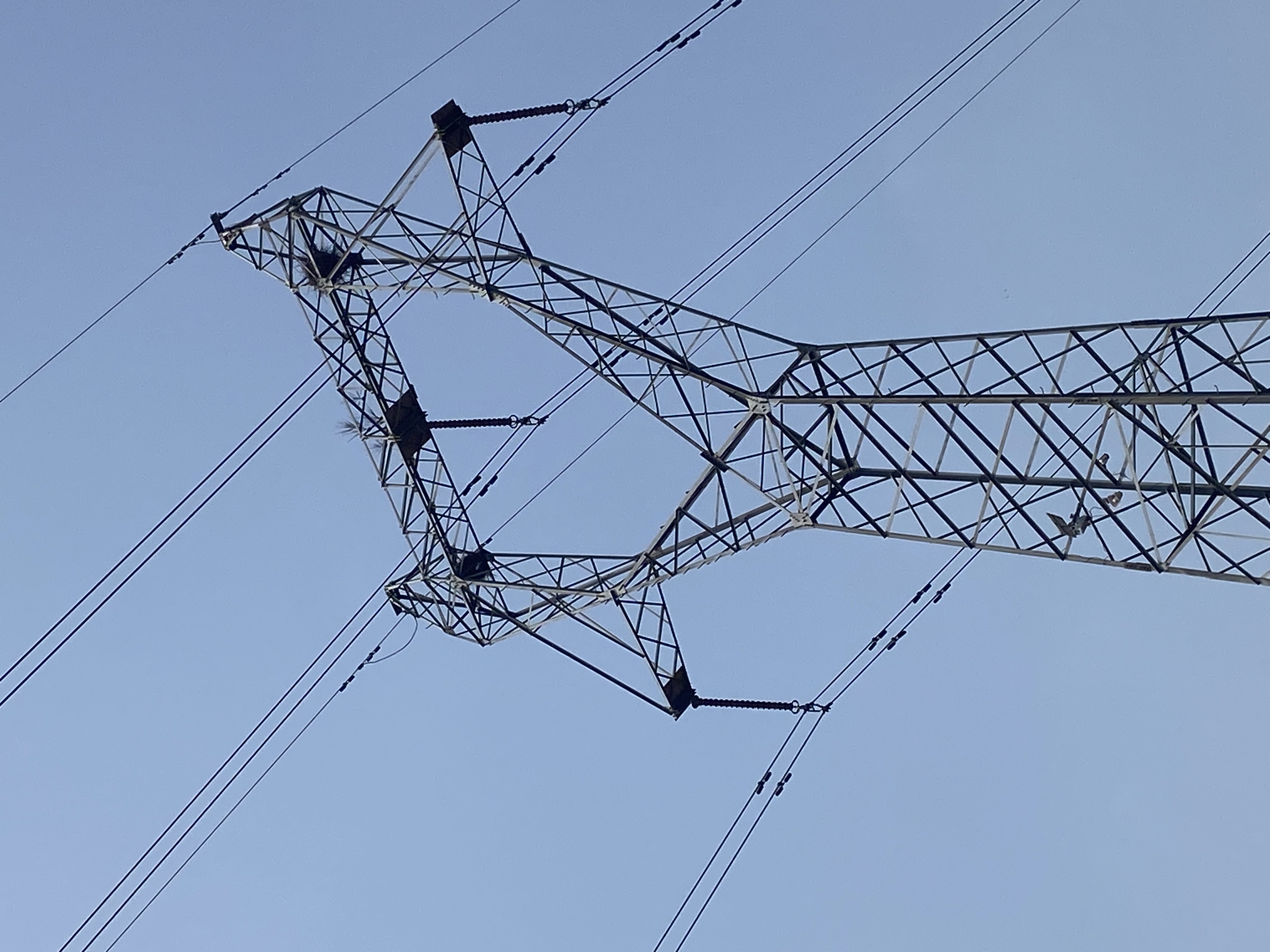
For any transmission line project, the voltage class determines far more than a set of numbers on a nameplate. It sets off a chain reaction that runs from electrical clearances, through tower geometry, all the way to steel grade selection and the cost of a single tower. Scaling up a 10kV structure to 1000kV is never a matter of simple enlargement. Understanding how voltage drives steel selection is essential for EPC contractors and procurement teams who need accurate budgeting and reliable performance.
Mapping the voltage ladder
Overhead transmission system is commonly grouped into four tiers. The 10–35kV range belongs to distribution networks serving urban and rural loads. The 110–220kV range is high-voltage transmission, the backbone of regional grids. The 330–500kV and 750kV levels are extra-high voltage (EHV), used for inter-provincial and inter-regional power transfer—750kV circuits operate mainly in the northwest grid. Above these sit ultra-high-voltage (UHV) systems: 1000kV AC and ±800kV DC, built for long-distance, high-capacity delivery. International grids use different intermediate levels—132kV, 275kV, 400kV or 765kV, for example—but the underlying rule is the same everywhere: the higher the voltage, the heavier the tower.
What rises with voltage is more than height
Higher voltage immediately raises electrical requirements. Phase-to-phase and phase-to-ground clearances must grow, insulator strings become longer, and tower head dimensions widen. To control losses and raise capacity, conductors get larger and higher classes adopt bundled conductors—500kV lines typically use four conductors per phase, 750kV uses six, and 1000kV AC projects use eight. More conductors per phase mean more vertical and horizontal load acting on the structure.
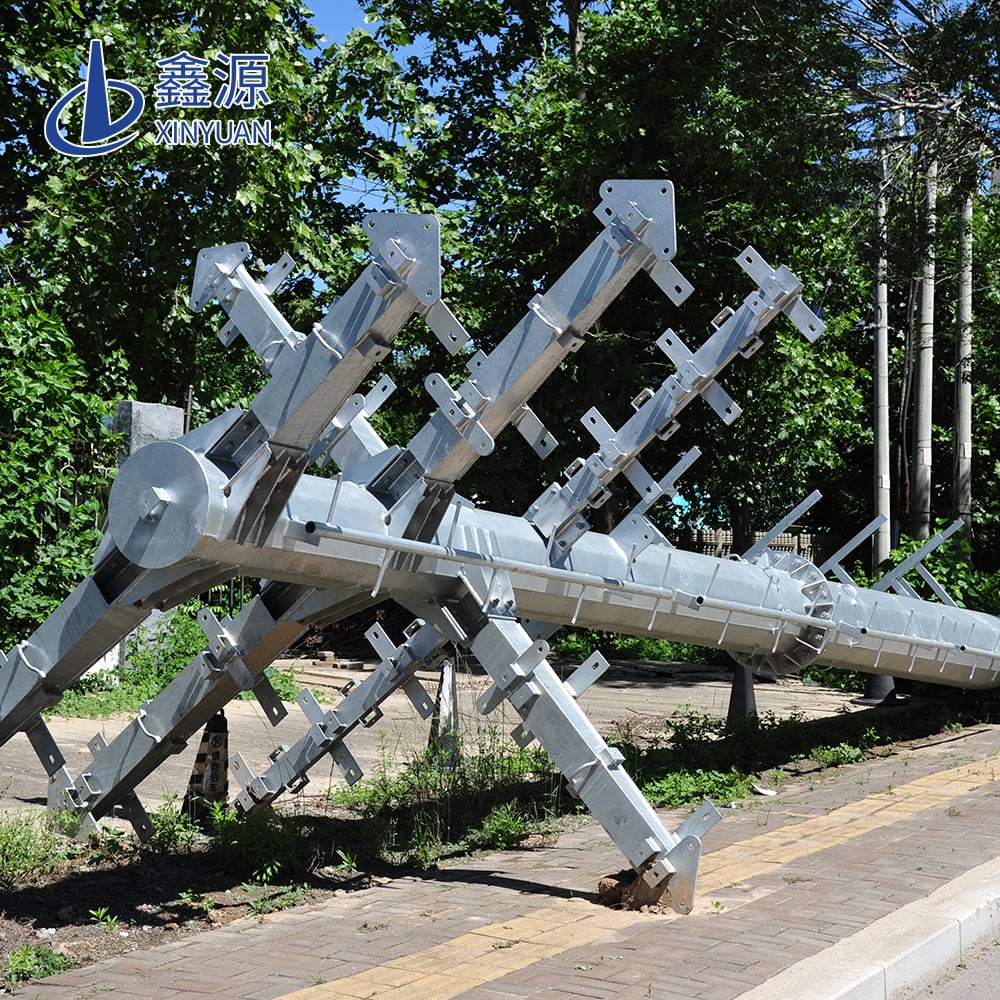
Translated into structural terms, the results are predictable: larger tower heads, taller and wider bodies, greater conductor tension, wind and ice loads—and therefore heavier members, higher steel grades, and a stepwise increase in tower weight at each voltage tier.
Tower types and steel across the voltage range
10–35kV (distribution): Light lattice towers, steel poles and concrete poles dominate. Circuits are usually single-circuit with a single conductor. Members are small, and Q235-grade steel is generally sufficient. A single tower typically weighs anywhere from a few hundred kilograms to several tonnes, depending on height and span.
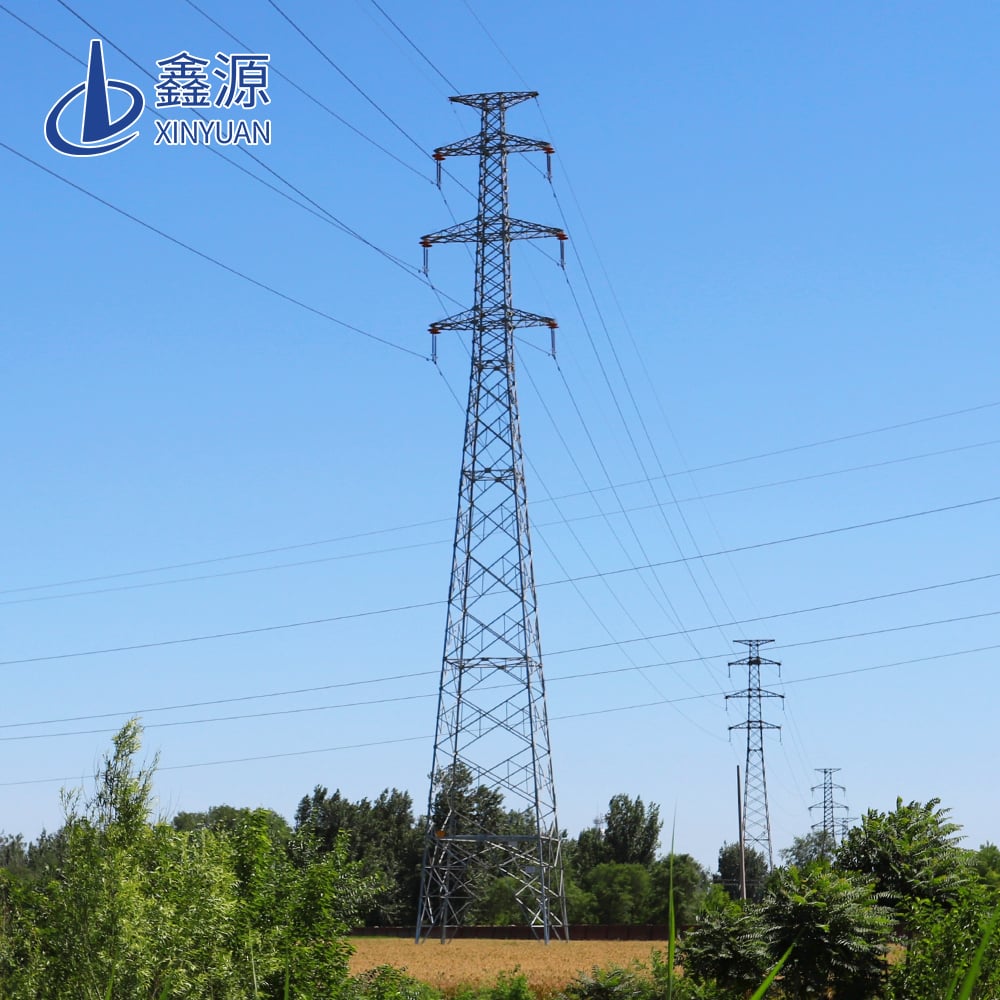
110–220kV (high voltage): This is the most intensive range for lattice angle-steel towers, with cup-type, cat-head, barrel and dry-type configurations built as both single- and double-circuit lines. Steel selection is typically a combination of Q235B and Q355B—Q355 is the former Q345 grade, renamed under GB/T 1591-2018—with main members upgraded per calculation where loads demand it. Conductors are single for most 110kV lines, while 220kV projects may use twin bundles or large cross-section single conductors. Tower weight ranges from several tonnes up to roughly twenty tonnes, rising notably in heavy-ice and high-wind districts.
330–500kV (EHV): Load levels enter the main-grid range. The cup-type single-circuit tower and barrel-type double-circuit tower are common, with four-bundle conductors standard on 500kV circuits. Q355 is the workhorse grade, while Q420 high-strength steel is applied at heavily loaded nodes and high-stress main members to cut weight. A single tower at this level commonly weighs tens of tonnes, with real values varying widely with height, design wind speed and ice loading.
750–1000kV (UHV): This is where the steel logic changes most dramatically. Tower head geometry and phase spacing expand sharply; insulator strings are made up of dozens of units and reach several metres in length, designed around pollution class and altitude. To control weight, the share of Q420 and Q460 high-strength steel rises clearly, and some projects have adopted Q690-grade material. A standard UHV suspension tower can require over one hundred tonnes of steel; river-crossing towers go far beyond. In published project reports, a 1000kV Zhangbei–Xiong'an tower reached 173 metres in height with 526 tonnes of steel, and a Yangtze River crossing tower stands 225.2 metres tall with a single-tower weight of 1,259 tonnes. The eight-bundle 1000kV and six-bundle 750kV conductor configurations are designed to match exactly these large load cases.
Voltage is not the only variable
It is worth repeating: two lines at the same nominal voltage can differ by several times in tower weight and steel consumption. Design wind speed and ice zone, number of circuits, span and terrain, altitude, and pollution class all reshape the load cases. Two 220kV projects—one on flat ground with short spans, one in mountainous heavy-ice conditions—may require drastically different steel tonnages. The correct selection logic is therefore to design from project loads and standards, not to reuse drawings by voltage class alone.
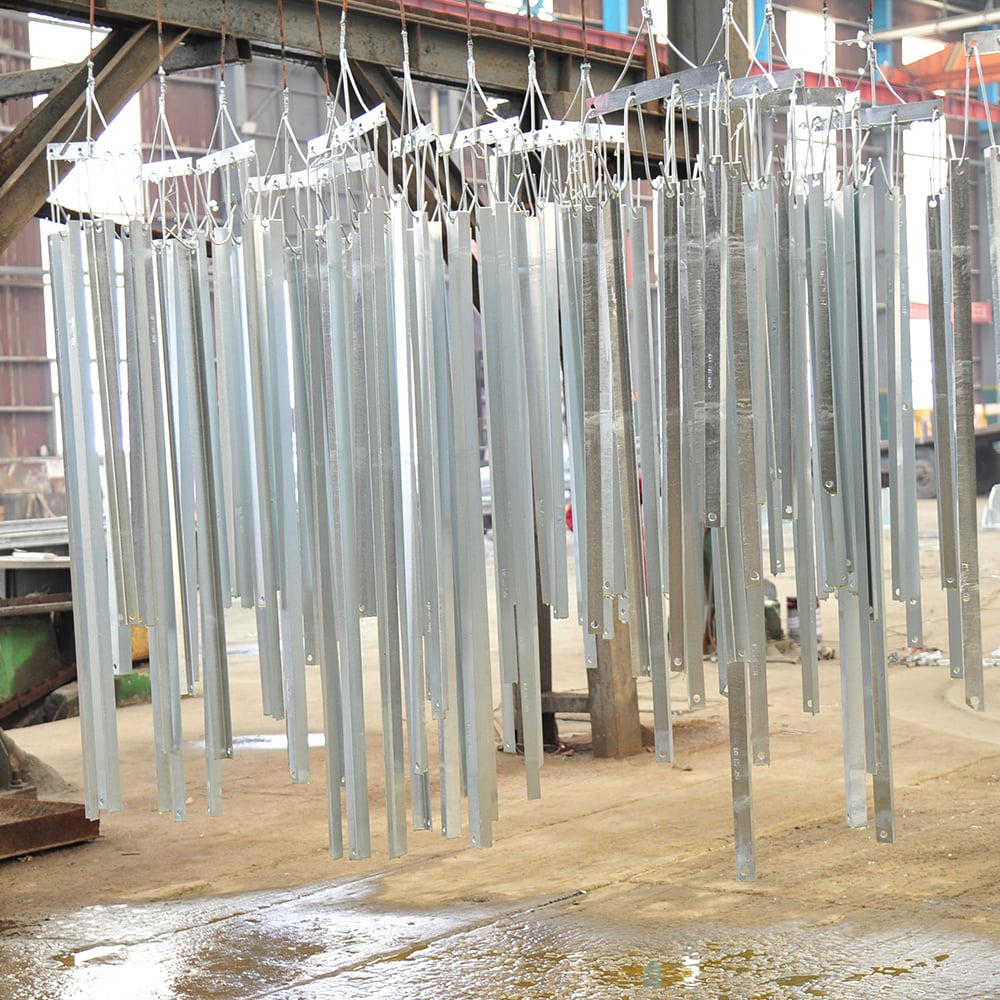
One discipline runs through every tier: corrosion protection. From 10kV to 1000kV, tower steel is normally hot-dip galvanized to standards such as ISO 1461 or GB/T 13912, with coating thickness graded by member thickness. The higher the voltage, the thicker the members—and the greater the weight carried by galvanizing quality and long-term maintenance access. For high-class lines, anti-corrosion investment is the foundation of decades of maintenance-free service.
Advice for buyers and engineers
In the early project stage, put these items into the technical clarification list: the applicable standard system (IEC, GB, ASTM, etc.) and load cases, tower type and circuit configuration, steel grades and the share of high-strength steel, galvanizing thickness requirements, and transport and site assembly conditions. Invite the manufacturer's engineering team into the selection review—let them run the load calculations and tower optimization against your project parameters, then accept delivery based on calculation reports and third-party test certificates. Voltage class sets the framework; what makes a tower reliable is whether every engineering parameter beneath that framework has been treated seriously.